
The Evolution of Workplace Refreshment Solutions
What is a micro market vending machine and why are companies across Dallas-Fort Worth making the switch from traditional breakroom setups? In today’s competitive job market, employee perks and workplace culture are more important than ever. The days of a drab breakroom with a humming, unreliable vending machine are over. Employees now expect amenities that support their health, convenience, and overall well-being. This is where the micro market revolution begins.
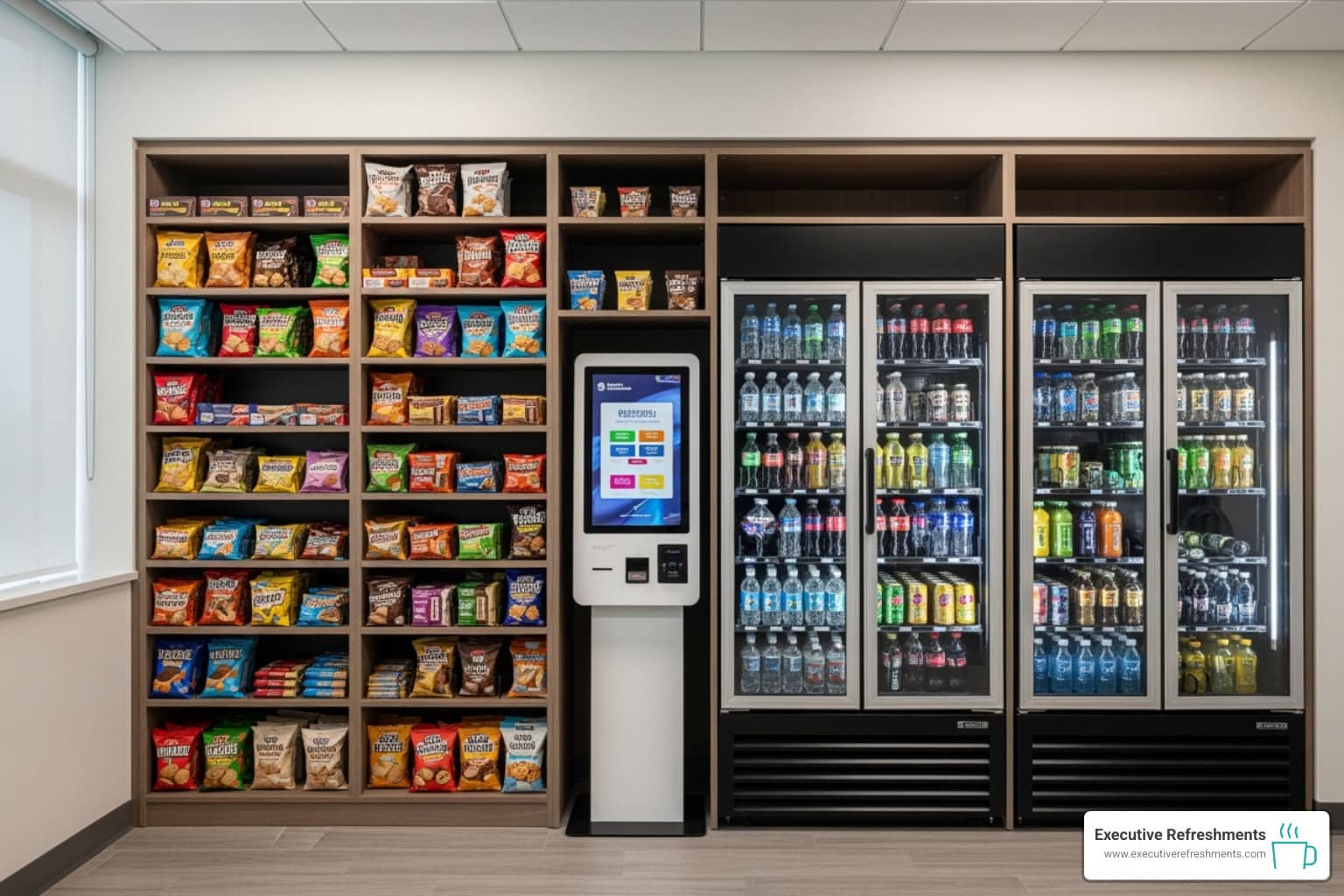
A micro market vending machine is an unattended, self-service convenience store that combines open shelving, glass-front coolers, and cashless checkout technology to create a modern retail experience right in your workplace. It’s a complete change of the breakroom concept, moving from a transactional, often frustrating experience to an open, inviting, and empowering one.
Here’s what makes micro markets a game-changer:
- Open Shopping Experience: Employees can freely browse products on shelves and in coolers, pick them up, read nutritional labels, and check expiration dates—just like in a mini convenience store.
- Self-Checkout Technology: A user-friendly kiosk allows employees to scan their chosen items and pay quickly with credit/debit cards, mobile payment apps, or even pre-loaded employee badges.
- Vast Product Selection: While traditional vending machines are limited to about 40 items, a micro market can easily stock 150-400 products, offering incredible variety.
- Fresh Food Options: This is perhaps the biggest advantage. Micro markets provide access to fresh salads, sandwiches, wraps, yogurt, and healthy snacks that are impossible to offer in a standard vending machine.
- 24/7 Availability: They operate around the clock without any staffing requirements, perfectly catering to businesses with multiple shifts or non-traditional work hours.
The numbers tell the story of this rapid change. According to Grand View Research, the North American micro market industry was worth $3.95 billion in 2022 and is expected to grow 13% annually through 2030. This isn’t just a trend; it’s a fundamental shift in how businesses approach employee amenities. Companies that switch from traditional vending to micro markets see an average 80% increase in location sales and achieve 17% profit margins compared to the meager 1.15% from old-school vending.
As Executive Refreshments, we’ve been at the forefront of this evolution, serving the Greater Dallas/Fort Worth metro area since 2000. With over 30 years of consumer food industry experience, we help businesses from Plano to Arlington and Frisco to Fort Worth understand what is a micro market vending machine and how it can fundamentally transform their workplace culture. Our founder, Lou Baresh, has personally witnessed how a well-designed micro market can become the heart of an office, boosting morale, fostering collaboration, and revolutionizing employee satisfaction and productivity across hundreds of DFW locations.
What is a Micro Market Vending Machine and How Does It Work?
What is a micro market vending machine? It’s essentially your favorite convenience store, shrunk down and placed right in your workplace breakroom. Picture walking into a bright, modern space where you can browse fresh salads, grab your morning coffee, or pick up that afternoon snack – all without a single cashier in sight. It’s a self-contained retail space that offers unparalleled convenience and choice, changing a simple break into a refreshing experience.
The National Automatic Merchandising Association (NAMA) defines micro markets as “unattended retail environments where consumers can engage with products on shelves and in open coolers.” Think of it as the perfect hybrid: combining the 24/7 convenience of traditional vending with the variety and superior shopping experience of your neighborhood corner store. It’s a solution designed for the modern workforce.
Here’s what makes these systems so appealing to companies across the Dallas-Fort Worth area. Unlike those old-school vending machines that seemed to eat your dollar bills and offer a limited selection of processed snacks, micro markets create an unattended retail environment where the employee is completely in control. You can physically pick up an item, check its expiration date, and read the nutrition labels before deciding to buy—just like shopping at any regular store. This transparency builds trust and empowers healthier choices.
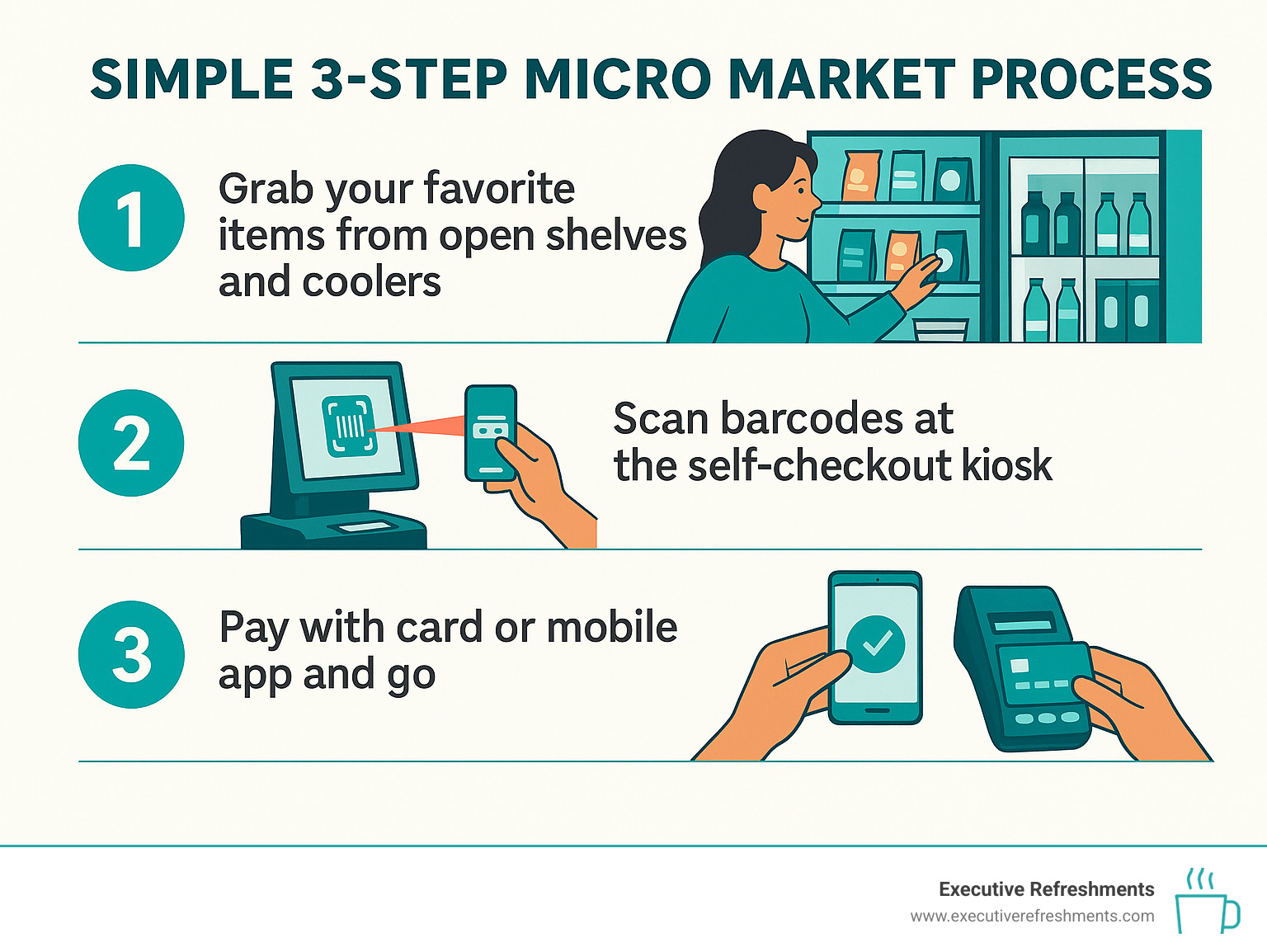
The customer journey couldn’t be simpler. You walk into the designated market space, browse the open shelves and glass-front coolers at your own pace, and select whatever catches your eye. Maybe it’s a fresh sandwich for lunch, a protein bar for a post-workout boost, or a healthy yogurt for your afternoon break. Once you’ve made your selections, you head to the sleek self-checkout kiosk, scan the barcodes on your items just like at the grocery store, and pay using your preferred method. There’s no fumbling for exact change, no wondering if your snack will get stuck, and no disappointment from an out-of-stock machine.
The Key Components of a Micro Market
Every micro market is carefully designed around six essential components that work together seamlessly to create a flawless user experience.
-
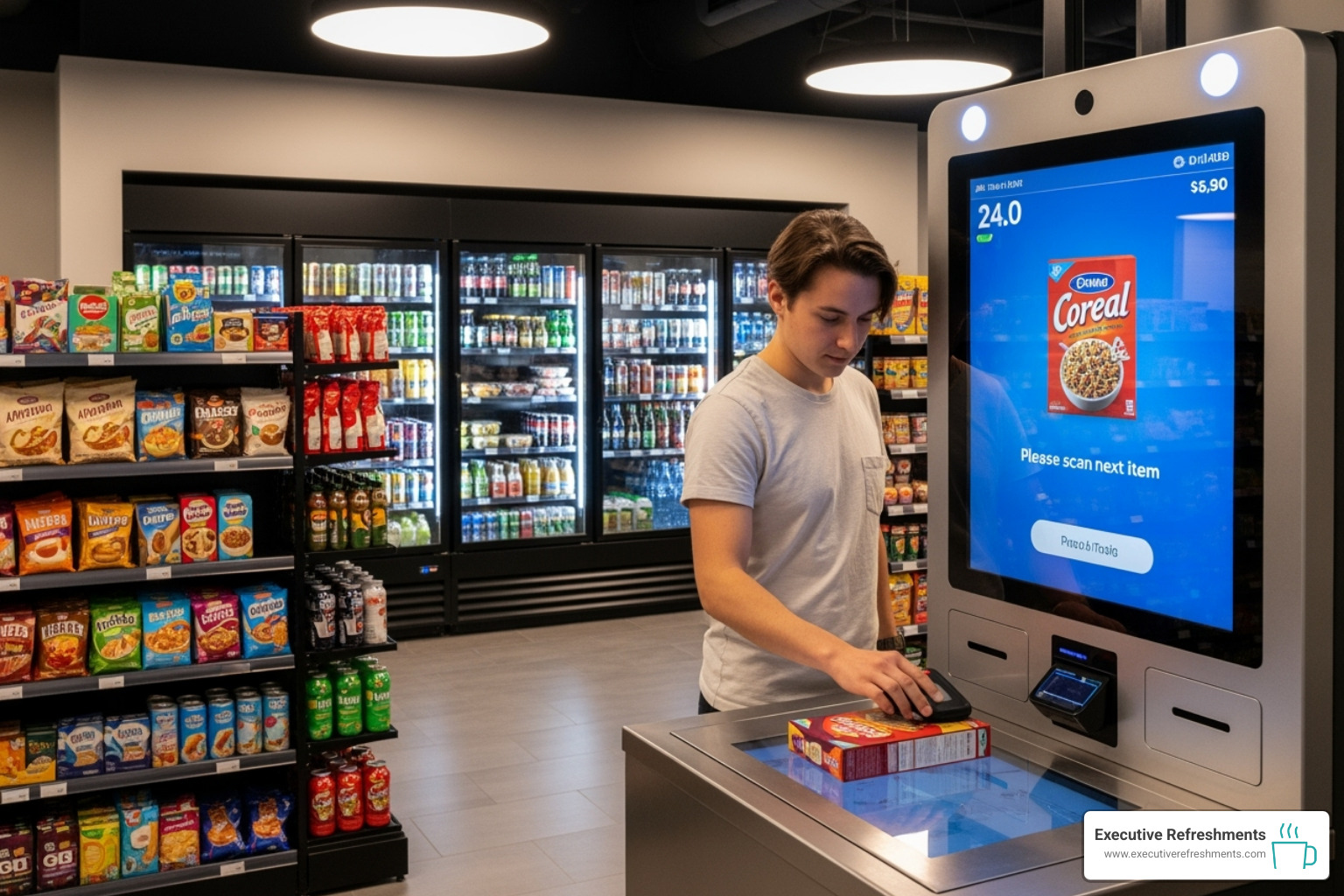
The Self-Checkout Kiosk: This is the central nervous system of the market. The kiosk features a large, intuitive touchscreen with a simple user interface that guides employees through a quick scanning and payment process. These modern terminals accept all forms of payment, including credit/debit cards (swipe, chip, and tap-to-pay), mobile wallets like Apple Pay and Google Pay, and stored-value accounts linked to an employee badge or mobile app. This versatility ensures no one is left out.
-
Open-Air Shelving: This is where the magic of variety happens. Gone are the restrictive coils and narrow slots of traditional vending machines. Instead, you’ll find attractive, spacious shelves that can accommodate a huge range of products, from bags of chips and candy bars to breakfast items, protein bars, and even non-food essentials like phone chargers and over-the-counter pain relievers. This open display encourages browsing, promotes new products, and gives the space a true retail feel.
-
Reach-In Coolers and Freezers: These are the game-changers for offering fresh, healthy food. High-efficiency, glass-front refrigeration units keep salads crisp, sandwiches fresh, dairy products cold, and beverages perfectly chilled. Freezers can be stocked with frozen entrees, ice cream, and other treats. Many modern units feature smart-lock technology that keeps the doors secured until a payment method is scanned at the kiosk, adding an extra layer of security while ensuring food safety and freshness.
-
Cashless Payment Systems: The backbone of the self-service model, robust cashless payment systems bring micro markets into the modern age. They eliminate the frustration of carrying cash or exact change. Employees can set up a market account, load funds online, and pay with a quick scan of their badge or fingerprint. This not only speeds up transactions but also allows companies to add funds to employee accounts as a reward or wellness incentive.
-
Discreet Security Cameras: To ensure the integrity of the unattended model, micro markets are monitored by discreet, high-definition security cameras. These systems provide 24/7 surveillance, creating peace of mind for both the service provider and the business owner. Their presence acts as a gentle deterrent against theft, which remains exceptionally low in these trusted, closed-loop environments, while maintaining the open, welcoming atmosphere that makes micro markets so popular.
-
Inventory Management Software: Behind the scenes, a sophisticated cloud-based inventory management system tracks every single sale in real-time. This powerful software monitors stock levels, identifies popular items, and even predicts buying patterns. This data allows providers like Executive Refreshments to restock your market with maximum efficiency, ensuring your team’s favorite items are always available and minimizing out-of-stocks. It also allows for a product mix that is perfectly custom to your employees’ preferences.
Micro Markets vs. Traditional Vending Machines
For decades, traditional vending machines were the only game in town for workplace refreshments. But as workplaces have evolved, so have expectations. Micro markets have changed everything, offering a dramatically better experience in almost every measurable way.
The contrast is stark. Imagine an employee on a tight deadline who needs a quick lunch. With a vending machine, their options are limited to chips, candy, and maybe a preservative-laden pastry. With a micro market, they can choose a fresh turkey sandwich on whole wheat, a side salad, and a bottle of kombucha, pay in seconds, and get back to their desk feeling energized.
| Feature | Micro Markets | Traditional Vending Machines |
|---|---|---|
| Product Variety | Typically 150-400 products, including fresh foods, healthy snacks, and gourmet coffee. Open shelving allows for flexible merchandising. | Limited to 40-60 distinct products, primarily pre-packaged snacks and drinks. |
| Fresh & Healthy Options | Extensive selection of salads, sandwiches, yogurt, and nutritious snacks alongside traditional favorites. | Mostly shelf-stable processed foods with limited healthy choices. |
| Payment Flexibility | Multiple payment options including cards, mobile apps, employee badges, and contactless payments. | Often cash-only or limited card acceptance, requiring exact change. |
| Customer Experience | Browse freely, read labels, check dates, and shop like a regular store with self-checkout convenience. | Pay first and hope your selection drops; no ability to inspect products before purchase. |
| Upfront Cost | No cost to businesses – providers handle all equipment and installation expenses. | May require upfront investment or leasing fees depending on arrangement. |
| Profitability | Higher profit margins (around 17%) due to increased sales volume and variety. | Lower profit margins (approximately 1.15%) with limited growth potential. |
The difference becomes even more obvious when you consider the daily frustrations of old technology. With micro markets, there’s no more lost money from machines that don’t work, no more calling a service number for a refund, no more getting stuck with a snack you didn’t actually want, and no more walking away empty-handed because the machine was out of order or didn’t accept your payment. It’s a seamless, modern, and reliable solution.
If you’re wondering which option makes more sense for your business, check out our detailed comparison: Micro Markets vs. Vending Machines: Which is the Better Option?